
The National Residential School Crisis Line: 1-866-925-4419
September 21 – 25, 2026
Open to the Public
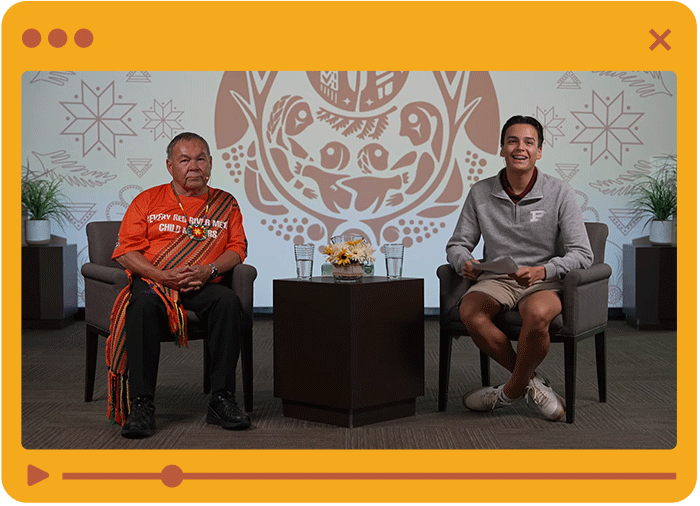
We invite you to join our daily Lunch and Learn webinars – an immersive experience to UN-learn the myths of colonial history in Canada.
Lunch and Learn sessions are aimed at an adult audience, and open to the public, and will be hosted virtually over Zoom Webinar and streamed to YouTube.
Most sessions will be 60 minutes in length and will include a Q&A between the moderator and guest(s).
All sessions will have simultaneous English-French, and ASL interpretation.
Truth and Reconciliation Week daily Lunch and Learn webinars are presented with the gracious support of Enbridge and the Canadian Public Health Association.
Program details will be available soon.
Monday, September 21
10:00am PT (Vancouver) | 11:00am MT (Calgary) | 12:00pm CT (Winnipeg) | 1:00pm ET (Toronto) | 2:00pm AT (Halifax) | 2:30pm NT (St. John’s)
Protecting Survivor Truths: Holding and Preserving Indigenous Lived Experience
English with French and ASL interpretation.
Organizations like the NCTR, the Shingwauk Residential Schools Centre and the National Indigenous Residential School Museum of Canada are the custodians of truths and evidence of colonial harm. Holding these truths is a sacred responsibility. Join us to learn more about what it means to be a protector of Survivor truths today.
Moderator: Elizabeth-Anne Johnson, Archives Data Coordinator, NCTR
Speakers:
Krista McCraken, Researcher & Curator, Shingwauk Residential Schools Centre (SRSC)
David Daniels, Knowledge Holder in-Residence, National Indigenous Residential School Museum of Canada
Edna Elias, NCTR Survivor Circle
Francis Dickie Yuzicapi, NCTR Survivor Circle
Space is limited to 5,000 participants. Pre-register to receive event updates and reminders by email.
If Zoom reaches capacity, watch the livestream on YouTube.
Tuesday, September 22
8:00am PT (Vancouver) | 9:00am MT (Calgary) | 10:00am CT (Winnipeg) | 11:00am ET (Toronto) | 12:00pm AT (Halifax) | 12:30pm NT (St. John’s)
Economic Reconciliation: Understanding Opportunities, Responsibilities, and Impact
English with French and ASL interpretation.*
This session will explore Economic Reconciliation and its significance for Indigenous communities, organizations, governments, and partners. Moving beyond awareness and dialogue, they will explore creating meaningful and sustainable economic relationships that support self-determination, prosperity, and community well-being.
Moderator: Natasha Delany, Founder and Executive Director, Indigenous Projects and Events
Speakers:
Chief Leanne Joe (Sxwpilemaát Siyám), Squamish Nation
Pam Krasniuk, Indigenous Program Developer, SEED Winnipeg Inc.
Space is limited to 5,000 participants. Pre-register to receive event updates and reminders by email.
If Zoom reaches capacity, watch the livestream on YouTube.
*Zoom capacity 5000 persons
Tuesday, September 22
10:00am PT (Vancouver) | 11:00am MT (Calgary) | 12:00pm CT (Winnipeg) | 1:00pm ET (Toronto) | 2:00pm AT (Halifax) | 2:30pm NT (St. John’s)
Growing and Strengthening Indigenous-Newcomer Solidarity
English with French and ASL interpretation.*
Newcomers to Canada are often inadvertently—or systematically—discouraged from engaging with Indigenous Peoples. When we bridge this gap, we find powerful solidarity between those who have faced colonial violence and displacement. This session explores how to foster these vital connections and responds to Calls to Action 93 and 94.
Moderator: Norm Leech, Executive Director, Frog Hollow Neighbourhood House
Speakers:
Scott Bazan, Director, Student Services, International College of Manitoba
Mbalu Lumor, Director Programs & Newcomer Services, Canadian Centre for Victims of Torture (CCVT)
Space is limited to 5,000 participants. Pre-register to receive event updates and reminders by email.
If Zoom reaches capacity, watch the livestream on YouTube.
Wednesday, September 23
10:00am PT (Vancouver) | 11:00am MT (Calgary) | 12:00pm CT (Winnipeg) | 1:00pm ET (Toronto) | 2:00pm AT (Halifax) | 2:30pm NT (St. John’s)
Continuing the Conversation on Residential School Denialism
English with French and ASL interpretation.
Building on last year’s dialogue, this session examines the reach and impact of residential school denialism. Learn how to identify harmful narratives and gain practical tools to address and dismantle misinformation.
Moderator: Dr. Jarita Greyeyes, Assistant Professor, Indigenous Studies, McMaster University
Speakers:
Lindsay Gibson, Associate Professor, Faculty of Education, University of British Columbia
James Miles, Assistant Professor, Faculty of Education, University of Alberta
Barb Cameron, NCTR Survivor Circle
Crystal Gail Fraser, NCTR Governing Circle
Space is limited to 5,000 participants. Pre-register to receive event updates and reminders by email.
If Zoom reaches capacity, watch the livestream on YouTube.
Thursday, September 24
*NEW TIME*
11:00am PT (Vancouver) | 12:00pm MT (Calgary) | 1:00pm CT (Winnipeg) | 2:00pm ET (Toronto) | 3:00pm AT (Halifax) | 3:30pm NT (St. John’s)
Honouring Indigenous Leadership: Perspectives for a Shared Future
English with French and ASL interpretation.
This session invites participants into a thoughtful conversation on the leadership, truths, and lived experiences shaping Indigenous futures across Canada and Turtle Island. Grounded in community knowledge and guided by those closest to the work, the session will explore the realities of Residential Schools, the Sixties Scoop, the ongoing fight for First Nations child rights, and the calls for justice from the MMIWG2S movement.
Moderator: Sky Bridges, President & CEO, Winnipeg Foundation
Speakers:
Wayne Garnons-Williams, CEO, Sixties Scoop Healing Foundation
Hilda Anderson-Pyrz, Chair, National Family and Survivors Circle Inc.
Stephanie Wellman, Director of External Affairs, Programs & Operations, First Nations Child & Family Caring Society
Kaila Johnston, Director of Education, NCTR
Space is limited to 5,000 participants. Pre-register to receive event updates and reminders by email.
If Zoom reaches capacity, watch the livestream on YouTube.
Friday, September 25
10:00am PT (Vancouver) | 11:00am MT (Calgary) | 12:00pm CT (Winnipeg) | 1:00pm ET (Toronto) | 2:00pm AT (Halifax) | 2:30pm NT (St. John’s)
Indigenous Youth Perspectives on Health and Wellbeing
English with French and ASL interpretation.*
This session features intergenerational perspectives on holistic health and wellness. We will explore the challenges faced by youth living in the shadow of residential schools and other colonial systems, and discuss how individuals and communities can support meaningful, culturally safe support.
Moderator: Diandre Thomas-Hart, Policy Analyst, Board Advisor, Marketing Manager, Entrepreneur & Multidisciplinary Artist
Speakers:
Sunday Queskekapow
Elder Bill McKenna, Urban Indigenous Wellbeing Collective
Space is limited to 5,000 participants. Pre-register to receive event updates and reminders by email.
If Zoom reaches capacity, watch the livestream on YouTube.
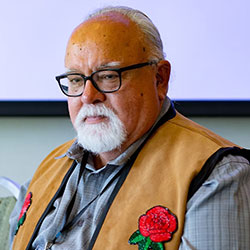
Elder Bill McKenna
Bill is Secwepemc and a member of the Stswecem’c Xget’tem First Nation. For 3 years Bill sat with a group of Elders supporting Indigenous families who were involved with the Ministry of Child and Family Development in Surrey B.C. Since relocating to Kelowna Bill has become the Vice-Chair of the board of directors for the Ki-Low-Na Friendship Society and is their delegate to the School District 23 Indigenous Education Council. Bill is a member of the B.C. Association of Friendship Centers provincial Elders Council and sits as an Elder advisor on the UBC Okanagan Urban Indigenous Wellbeing Collective.
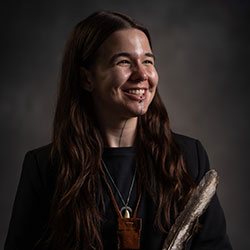
Sunday Queskekapow
Sunday Queskekapow (They/Them) is an autistic, differently abled, Níso Ahcahk Ká-Ayácik (Two-Spirit), Status First Nations youth with mixed Néhinawak, Métis, and settler ancestry. Originally from Ohpáskowayáhk (The Pas and Opaskwayak Cree Nation) and a registered band member of Kínoséwi-Sípiy (Norway House Cree Nation), both located in Northern Manitoba on Treaty 5 territory, they now live, advocate, and study on Treaty 1 territory. Currently, Sunday is the Co-Chair of the Assembly of Manitoba Chiefs Two-Spirit and 2SLGBTQQIA+ Council, the Vice-Chair of the 2Spirit’s in Motion Society Youth Council, and an advisory member of the Province of Manitoba’s Suicide Prevention Circle. Alongside their advocacy, Sunday is a Social Work student at the University of Manitoba. As part of the Wolf Clan, Sunday aims to work with humility continuously and is dedicated to serving and uplifting Northern Indigenous 2SLGBTQQIA+ and disabled peoples.
Diandre HartSkipper
Diandre HartSkipper is a Swampy Cree and Red River Métis woman from Treaty No. 1 Territory, connected to Peguis First Nation and Nisichawayasihk Cree Nation. She has spent over 10 years advancing truth and reconciliation and uplifting Indigenous youth leadership. Diandre is now a Policy Analyst, business owner, and Lead Marketing Manager for the Manito Ahbee Festival, working as a storyteller, producer, and cultural navigator.
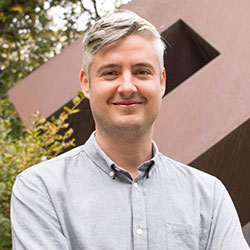
James Miles
James Miles is a settler Canadian and an assistant professor in the Faculty of Education at the University of Alberta. His research focuses on historical thinking and the role of education in movements of redress, reconciliation and historical justice. Previously, James was a social studies teacher in British Columbia for ten years.
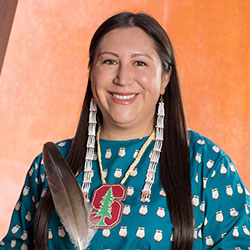
Dr. Jarita Greyeyes
Dr. Jarita Greyeyes (she/her) is nēhiyaw (Plains Cree) from Treaty Six territory and an intergenerational Survivor of the residential and day school systems. Jarita received her PhD from Stanford University and is an Assistant Professor of Indigenous Studies at McMaster University.
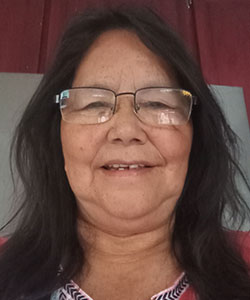
Mavis Moberly
Mavis Moberly is a mother, grandmother, and great grandmother and her family has always been her number one priority. She is a Survivor of residential school and the sixties scoop. Mavis has taught and facilitated in schools and community about Indigenous culture, residential school, and the sixties scoop. She is aware of the issues and needs of Indigenous communities from doing community supports for several years. Her favorite past time is making ribbon skirts at home and in community (especially with youth) and making various types of craft classes.
Pam Krasniuk
Pam Krasniuk (she/her/hers) draws her strength and teachings from her Anishinaabe (Ojibwe)/Metis ancestry. She is an admired community leader, mentor and mother. Pam is most passionate about contributing her Life’s work to community – led grassroots organizations that centers on financial empowerment, language and culture and the protection of Indigenous woman and girls.
An active member of Manitoba’s Indigenous financial and grass roots community, Pam is a traditional ceremony woman. In her work at SEED as an Indigenous Programs Developer, Pam makes every effort to infuse her cultural knowledge into her financial empowerment teachings and practices to support the cultural individualities of Indigenous families and to strengthen relationships between all walks of Life.
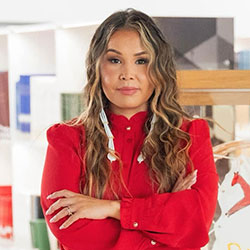
Natasha Delany
Natasha Delany, MBA, is a Cree entrepreneur, facilitator, and community leader from Samson Cree Nation. She is the Founder and Executive Director of Indigenous Projects & Events, a national Indigenous-owned organization specializing in corporate event planning and management, K–12 events and programming, and an Indigenous speakers and facilitators bureau.
Natasha also leads IndigiRise Foundation, which delivers Indigenous-focused business accelerator, life skills, leadership, and employment programming. The Foundation’s work is rooted in the understanding that systemic barriers do not disappear simply because opportunities in employment, education, leadership, or business become available. Its focus is on strengthening Indigenous people, communities, and the systems around them to build the capacity, leadership, and economic foundations needed for lasting change. Through both organizations, Natasha works to create meaningful opportunities for Indigenous participation, leadership, economic advancement, and reconciliation.
Elizabeth Anne Johnson
Elizabeth-Anne Johnson has been Archives Data Coordinator at the National Centre for Truth and Reconciliation Archives since 2024. Her work includes managing the ingestion of archival material and descriptions into the NCTR’s archival access and preservation systems. A graduate of the University of Manitoba’s Archival Studies program, she previously worked as Electronic Records Archivist at the University of Calgary.
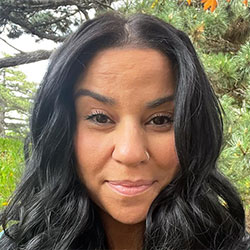
Stephanie Wellman
Stephanie is Manitoba Métis from Treaty One Territory, currently residing on unceded and unsurrendered Algonquin Territory. Stephanie has been working in Indigenous health and social policy for over ten years, advocating for the advancement and promotion of Indigenous led and determined approaches and priorities to health and social services, including: First Nations Child and Family Services, Jordan’s Principle, First Nations Income Assistance, Poverty Reduction, Indigenous Early Learning and Childcare, Mental Wellness and Life Promotion, focusing on the intersectionality of social determinants and socioeconomic realities of Indigenous children and families.
Stephanie holds a master’s degree in criminology from the University of Ottawa, focused on the over-incarceration of Indigenous people and the systemic barriers in the criminal justice system. She is passionate about criminal justice reform through decolonizing institutions and how ongoing oppressive and assimilationist agendas continue to affect how so-called “justice” is administered.
Hilda Anderson-Pyrz
Hilda Anderson-Pyrz is a proud member of O-Pipon-Na-Piwin Cree Nation (OPCN) and a nationally respected Indigenous leader whose work turns lived experience into powerful advocacy and systemic change. As President of the National Family and Survivors Circle Inc., she brings the strength of a survivor and the perspective of a family member directly impacted by the crisis of Missing and Murdered Indigenous Women, Girls, and 2SLGBTQQIA+ people (MMIWG2S+). Her leadership is grounded in deep community connection and frontline expertise. Hilda’s work is rooted in the understanding that Indigenous women, girls, and 2SLGBTQQIA+ people are sacred. She is committed to centering the voices of families and survivors, and to advancing Indigenous-led, rights-based, and decolonizing approaches to justice and healing. Her advocacy is guided by cultural knowledge, humility, and a vision for self-determined futures for all Indigenous peoples. Raised on the shores of South Indian Lake and Rusty River, Hilda’s early life was shaped by the land and the teachings of her late father, a commercial fisherman and trapper.
These foundations instilled a deep sense of identity, responsibility, and purpose, anchored in the strength of her Cree language, values, and traditions. For over two decades, Hilda has led transformative initiatives at the local, regional, and national levels. She played a key role in creating the MMIWG Liaison Unit at Manitoba Keewatinowi Okimakanak Inc., where she served as Director for five years. Her leadership has also extended to the Families First Foundation and the Manitoba MMIWG Coalition. Whether at community gatherings or international forums like the United Nations, she speaks with the authority of lived experience and the power of collective truth. Hilda’s lifelong dedication has earned numerous awards, recognizing her impact on justice, healing, and systems change. She is not only an advocate, but also a movement builder, a truth-teller, and a protector of community. With courage and compassion, she carries forward the stories of those who are missing, murdered, and surviving and calls on all to stand together in building a just future rooted in accountability and action.
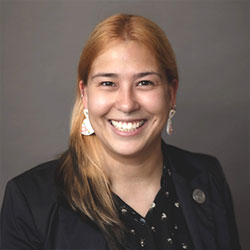
Kaila Johnston
As the Director of Education, Outreach and Public Programming, Kaila Johnston oversees matters related to the support of educators, development of resources, establishment of outreach initiatives, as well as public engagement on residential schools and their legacy. Prior to joining the National Centre for Truth and Reconciliation (NCTR), Kaila worked with the Truth and Reconciliation Commission of Canada (TRC) as a statement gatherer and coordinator. She holds a BA (Hons.) in Criminal Justice from the University of Winnipeg and a MSc in International Crimes and Criminology from Vrije Universiteit, Amsterdam.
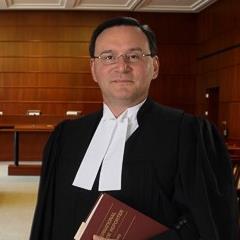
Wayne Garnons-Williams
Wayne Garnons-Williams, B.A., J.D., M.P.A., LL.M. Plains Cree from Treaty 6, Moosomin First Nation. CEO, National Sixties Scoop Healing Foundation of Canada President, International Inter-tribal Trade and Investment Organization, Senior Lawyer, Garwill Law Professional Corporation Principal Director Indigenous Sovereign Trade Consultancy Ltd. Lecturer, Indigenous Entrepreneurship Program, University of Waterloo Founding member, Government of Canada, Global Affairs Working Group on Indigenous International Trade. Lead Canadian Indigenous Negotiator, Indigenous Peoples Economic Trade and Cooperation Arrangement (IPETCA) Appointed in 2020 as a CUSMA Advisory Committee Member on Private Commercial Disputes, Article 31.22.
Board member, International Law Association – Canada Chapter Past Chair, Federation of Saskatchewan Indian Nations Appeal Tribunal, Past Chair, National Council of Federal Aboriginal Employees Past Corporate Secretary, Council of the Great Lakes Region Past Board Member, Capacity Canada 2018 Research Fellow, International Comparative Indigenous law, University of Oklahoma, College of Law. 2022 Senior Legal Fellow, Centre for International Sustainable Development Law (CISDL) Recently published a law textbook from Cambridge University Press with Dr. Marie-Claire Cordonnier Segar, on International Indigenous Trade, Indigenous Treaty & Indigenous Environmental Stewardship entitled “Indigenous Peoples Inspiring Sustainable Development”.
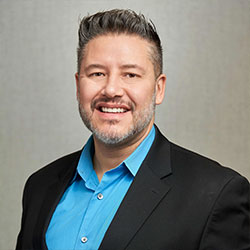
Sky Bridges
Sky Bridges has proudly led The Winnipeg Foundation since April 2021, bringing over four years of dedicated service to the organization. Known for his relationship-building skills and community-focused leadership style, Sky is passionate about fostering connections that strengthen Manitoba’s social fabric.
A graduate of Red River College, Sky holds a Diploma in Business Administration and an Advanced Diploma in International Business. His professional journey is complemented by a lifelong commitment to volunteering with organizations that build stronger, more inclusive communities.
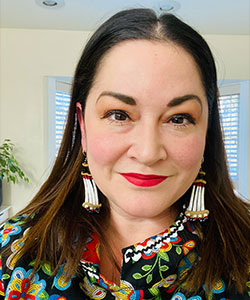
Dr. Crystal Gail Fraser
Dr. Crystal Gail Fraser is a Gwichyà Gwich’in historian and Indigenous studies scholar at the University of Alberta. Her work focuses on the histories and ongoing legacies of residential schooling, particularly in the Canadian North, as well as oral history, Indigenous governance, and community-driven research. She is the author of By Strength, We Are Still Here: Indigenous Peoples and Indian Residential Schooling in Inuvik, Northwest Territories and co-author of the national bestseller Talk Treaty to Me: Understanding the Basics of Treaties and Land in Canada.
Her scholarship and public engagement have been recognized with a Governor General’s Award for Scholarly Excellence. Through Survivor-centred research and public education, she works to uphold Indigenous knowledge, confront historical denialism, and support truthful understandings of Canada’s colonial past and present.
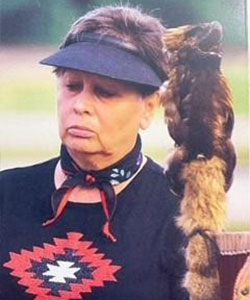
Barb Cameron
“Neegaunibinessikwe” meaning “Female Leader of the Thunderbirds” and “Begonegeezhig” meaning “Hole in the Sky” belongs to the Wolf Clan and is fourth degree Midewiwin Shkabehikwe to Minweyweywigaan Midewiwin Lodge in Roseau River, Manitoba. She is active in reconnecting, learning, assisting, and maintaining the Traditional Knowledges and the practices of Midewiwin ceremonial teachings at the Lodge. Neegaunibinessikwe is a member of Long Plain First Nation, a well-respected Knowledge Keeper, and is a third-generation Indian residential school Survivor. She remains a fluent Anishinabemowin speaker despite the challenges faced during her attendance at the Brandon Indian Residential School.
She began work as a Court Interpreter in the Manitoba Provincial Court System under the tutelage of Angus Merrick. Later in her career, she played an essential role as an interpreter and statement gatherer on behalf of residential school Survivors during the Truth and Reconciliation Commission’s national hearings. Aside from being a Survivors Circle member, Neegaunibinessikwe is a Crisis Counsellor and Mental Health Therapist for remote Indigenous Communities. She continues to work with Indigenous communities as a Knowledge Keeper by restoring connections with their Spirits and their way of life as given to us from the Creator.
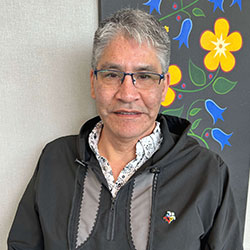
Jerome Gordon
Originally from Aklavik, Northwest Territories, Jerome now lives in Inuvik. He grew up with his grandparents, Danny A and Annie B Gordon. His great-grandparents, Alex and Hope Gordon, and Rev. Jim Sittichinli and his wife, Julia Sittichinli, were also part of his upbringing. Jerome spent part of each year growing up on the land during the busy Muskrat season in the Mackenzie Delta. He later attended Grollier Hall Residential School in Inuvik, where he completed high school. Jerome has held many leadership positions in his community and region over the years, serving as a Hamlet Councillor and Deputy Mayor of Aklavik for several terms.
He enjoys advocating for and representing his community and the people of the Mackenzie Delta. Jerome worked as an Indian Residential Schools Resolution Health Support, providing vital assistance to people in his region throughout the Indian Residential Schools process. He is currently a mental health and wellness manager for the Inuvik Community Corporation and continues to support the residents of Inuvik and the Mackenzie Delta with healthy living programming.
Norm Leech
Executive Director, Frog Hollow Neighbourhood House; Director, Vancouver Aboriginal Community Policing Centre (VACPC); President, DTES Community Land Trust; President, Aboriginal Front Door Society; Director, Metro Vancouver Aboriginal Executive Council/ Slaxin Lelum; Director, Britannia Community Centre Board of Management; Director, Affiliation of Multicultural Societies and Service Agencies; Director, Foundation for a Path Forward; Founder, Society of Our Grandmother Earth; and Director, Lillooet Learning Community Society.
The Frog Hollow Neighbourhood House serves East Vancouver with a variety of programs including childcare, settlement, social housing, training, youth, families, seniors, and women’s services. The VACPC serves the 70,000 urban Indigenous people in Vancouver who are over-represented in virtually every negative social health indicator measured. VACPC Programs include MMIWG, justice, overdose prevention, homelessness, youth at risk, education, training, trauma, food security, decolonization, and more.
The DTES Community Land Trust is moving toward a more Indigenous relationship with land that is sustainable, responsible, healing. This can help preserve affordable housing by sheltering property from the global market that is increasing housing costs around the world. Norm speaks widely on inter-generational trauma due to colonization. He grew up in East Vancouver, with ancestry in the T’it’q’et community of the St’at’imc nation where he has served as Chief and also Administrator. He draws on his experiences as a recovering alcoholic/ addict, inter-generational survivor, and spiritual explorer to inform his current work which includes several boards and committees.
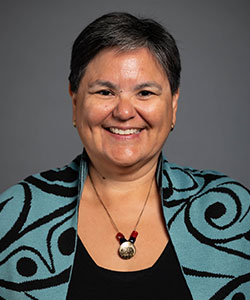
Chief Leanne Joe
Sxwpilemaát Siyám, also known as Chief Leanne Joe, of the Squamish Nation, is one of sixteen Hereditary Chiefs of the Squamish Nation and the first female Chief of her Lackett Joe Family. She shares her traditional name with her late father, Sxwpilem Siyám, Chief Philip Joe. Sxwpilemaát Siyám is also a descendent of the Kwakwaka’wakw speaking people and carries the traditional name of Q-Gee-Sea Loud and the Thomas family of the Tsleil-Waututh Nation. Sxwpilemaát Siyám was born and raised on the beautiful shores of North Vancouver while having close relations to her roots on the east coast shores of Vancouver Island.
Her family lives in her husband’s ancestral territory of the Sylix and Nlaka’pam speaking people, aka Merritt, BC. Sxwpilemaát Siyám holds space in many organizations, focusing her work on Economic Reconciliation, rematriation and education. She owns her own consulting company, Siyam Consulting. She currently serves as a Chair for the Squamish Nation Trust and the Reconciliation and Responsible Investment Institute, Board member of the New Relationship Trust and the Women in Leadership Foundation and advisory to other committees. Her educational background includes a B.A. in Business, CED Certificate, and other related training and experience.
Her greatest role is being a mom. Her son is paying witness to the legacy work she embodies every day.
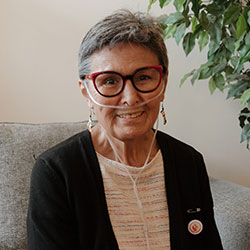
Edna Elias
Edna Elias was called by her grandmother, “Haattuliarmiutaq”, meaning “a person from thin ice” because she was born on a fishing lake in the fall. Thus, the reason why she loves ice fishing in the fall and spring. A teacher by profession, Edna is an Inuit language and cultural advocate. She has lived and breathed her culture in an urban setting; showcasing it where and when she can at Edmonton events. She shares her cultural knowledge through presentations at educational institutions and elementary schools in and around the city.
Teaching Inuinnaqtun, the dialect of the Copper Inuit of western Kitikmeot in Nunavut is another passion to train adults, language teachers, staff of pre-school and daycare programs, educators and parents of small children.
Currently residing in Edmonton, Edna has been actively involved in several Indigenous Advisory Circles as a voice for Inuit. As of late, she joined the Grant MacEwen University Indigenous Advisory Council, the Royal Alberta Museum Indigenous Advisory Council, the Edmonton International Elders & Knowledge Keepers Circle on the project, Indigenous Spaces, the Indigenous Advisory Council for the City of Edmonton and the Indigenous Advisory Council on the project, Towards Home (curbing homelessness).
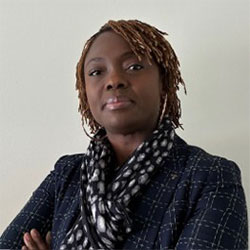
Mbalu Lumor
Mbalu Lumor is the Director of programs and newcomer services at the Canadian Centre for Victims of Torture (CCVT) and a provincial director at the Ontario Council of Agencies Serving Immigrants (OCASI). She is passionate about social justice, decolonization, accountability by non-Indigenous racialized people and the co-author of the article, The Politics of Allyship with Indigenous Peoples in the Canadian Refugee-Serving Sector. Mbalu is pursuing doctoral studies in Health Policy and Equity at York University.
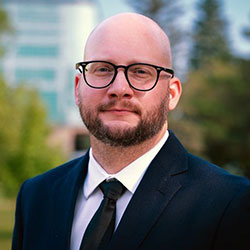
Scott Bazan
Scott Bazan is the Director of Student Services at the International College of Manitoba (ICM), where he oversees academic and student success programming for first-year international students. With more than eight years of experience at ICM, Scott has worked closely with students, instructors, and staff to support student achievement and engagement. Prior to joining ICM, he lived in South Korea and taught English as a Second Language. Outside of work, Scott is an avid live music enthusiast and enjoys attending as many concerts and performances as possible.
Dr. Sean Carleton
Dr. Sean Carleton is a settler scholar and Assistant Professor in the Departments of History and Indigenous Studies at the University of Manitoba in Winnipeg, Manitoba, Treaty 1 territory and the homeland of the Métis Nation. His research examines the history and political economy of colonialism, capitalism and education in Canada. He holds a BA and MA degrees in History from Simon Fraser University and a PhD from the Frost Centre for Canadian Studies and Indigenous Studies at Trent University. Dr. Carleton has been a Visiting Research Scholar in the Department of Economic History at the London School of Economics, and held a post-doctoral fellowship in the Departments of History and Native Studies at the University of Alberta.
Keira Cappo
Keira Cappo is from the Muscowpetung Saulteaux Nation, which is in Treaty 4 Territory, southern Saskatchewan. She works out of Regina SK and has been with Enbridge for 5 years where she is currently the Strategist for Indigenous Partnerships, Policy and Strategic Initiatives. Prior to her work with Enbridge, Keira spent many years working for her Nation’s leadership on legal claims, economic development, post-secondary education, administration, and governance. She has over a decade of experience working in First Nation communities through health programming, career development, and community engagement. She currently leads the implementation of Enbridge’s Indigenous Reconciliation Action Plan.
Fiona Kirkpatrick Parsons
Fiona Kirkpatrick Parsons is owīhtamakīw (meaning “one who advises” in the Woodland Cree language) with Kirkpatrick Parsons Consulting and is a passionate champion of reconciliation in Canada. A member of Lac La Ronge First Nation, Treaty 6 Territory, where she was born, she is equally proud of both her Woodland Cree roots on her mother’s side and Scottish ancestry on her father’s. She has lived in Kjipuktuk, Mi’kma’ki (Halifax, Nova Scotia), the traditional, unceded territory of the Mi’kmaq since 1999.
Prior to returning to her own consultancy in 2024, Fiona was instrumental in spearheading and advancing reconciliation efforts at the largest professional services firm in Canada, resulting in the organization publishing the first reconciliation action plan in corporate Canada. She provided strategic guidance to leadership on reconciliation, worked with clients on Indigenous-related engagements, and co-authored a publication on the inextricable link between climate action and reconciliation. Prior to that portion of her career, Fiona dedicated more than 30 years in the communications and marketing field, in the public, private, and media sectors.
Nadine Patel
For over 10 years, Nadine Patel developed strategies and campaigns that drive impact, increase engagement, and nurture a sense of inclusion. She’s proud to embed inclusion and equity principles while developing programs and resources to build a culture of belonging to strengthen corporate commitment, business development, and employee and community relationships. A strong collaborator, she believes in the power of trusted partnerships that can empower and inspire others to be their authentic selves.
Dan Adams
BMO Bank of Montreal
Head, Office of Reconciliation
Dan and life long resident of Northwestern Ontario, who has 26 years in the Financial Industry is dedicated to Indigenous Banking. Dan oversees all aspects of market, cultural awareness, and education to further our journey of reconciliation.
Dan is equally passionate on both; customer’s economic, social and community and also educating colleagues on history, truth and reconciliation.
Dan has won many BMO awards, including several Conference of Stars, however the proudest accomplishment is earning the trust and respect from Indigenous friends, family and customers. Learning Indigenous culture, language and customs will continue to be motivation to better serve our customers and represent BMO.
Ry Moran
Ry Moran was the founding director for the National Centre for Truth and Reconciliation (NTRC). Among many significant projects, Ry launched the Indigenous Peoples Atlas of Canada, and contributed directly to the launch of Gord Downie’s “Secret Path”. All this work rests on a foundation of music. Ry is a dynamic multi-instrumentalist, songwriter and producer, and it was Ry’s love of music production that was deployed in recording residential school survivors from coast to coast. Despite a pause in public performances during his time with the NCTR, music remained a constant – not only as a place of emotional healing, but of active composition and recording. Ry’s music is now ready to re-emerge, and we are proud to present his work as part of the 8th edition of NEUZTEC. Ry currently serves as Canada’s inaugural Associate University Librarian of Reconciliation at the University of Victoria, and is a special guest on the Victoria Conservatory of Music’s faculty for the 2023-2024 academic year.
Dr. Marie Wilson
Marie Wilson is a Canadian journalist and public administrator who served as one of three commissioners of the Truth and Reconciliation Commission of Canada (TRC). Born in Petrolia, Ontario, Wilson holds a Bachelor of Arts degree in French language and literature and a Master of Arts degree in journalism, both from the University of Western Ontario. She spent over 35 years working in journalism for the Canadian Broadcasting Corporation, including as regional director for CBC North and as adviser to the South African Broadcasting Corporation. In 2015, she served as a professor of practice at McGill University. Prior to her appointment to the TRC, she was employed by the Workers’ Safety and Compensation Commission of the Northwest Territories as vice president for operations. The sole non-Indigenous TRC commissioner, she worked for over six years documenting the history and lasting impacts of the Canadian Indian residential school system. Wilson has received multiple awards and recognition for her work. She was appointed to the Order of Canada and the Order of the Northwest Territories in 2017. In addition, she is the recipient of the Meritorious Service Cross, a Queen Elizabeth II Diamond Jubilee Medal, the CBC North Award for Lifetime Achievement, a Northerner of the Year Award, the Calgary Peace Prize, and honorary doctorates from St. Thomas University, the Atlantic School of Theology, and the University of Manitoba. Wilson has three children with her husband Stephen Kakfwi, former Dene Nation Chief and Premier of the Northwest Territories.
Roxanne Balan
Roxanne Balan, a member of Shoal Lake No. 40 First Nation is an Anishinaabe advocate, consultant, and facilitator grounded in cultural pride, language, and tradition. With training in Indigenous Governance, Project Management, and Comprehensive Community Planning, she supports communities and organizations through strategic projects, public speaking, panel moderation, and emceeing. Roxanne blends project management with inclusive engagement methods, using graphic illustration to translate complex ideas into visuals that resonate. Her approach is collaborative and strengths-based, centering community voices to drive practical results. Guided by a clear vision to uplift communities so everyone can thrive. Roxanne helps partners design pathways for meaningful change and collective wellbeing.
Janice Forsyth
Author Janice Forsyth’s work combines history and sociology to explore the relationship between sport and culture from Indigenous points of view. She focuses on the way organized sports have been used as tools for colonization, and how Indigenous people have taken up those same activities for cultural regeneration and survival. Her work has informed policy and program development across sectors, including youth and community development, justice, education, citizenship, and health, in addition to sport and physical activity. She often works with governments and non-profit organizations to develop more and better opportunities for Indigenous people to engage in sport and physical activity.
Dr. Savage Bear
Savage Bear is a rabble-rouser, Nehiyaw’iskwew (Cree woman) and member of the Montreal Lake Cree Nation in northern Saskatchewan. She is the Director for the McMaster Indigenous Research Institute (MIRI) and is an Assistant Professor within the Indigenous Studies Department. Savage is also the National Director of Walls to Bridges; an education program bringing post-secondary education to incarcerated and formerly incarcerated folks. Prior to arriving at McMaster in 2021, Bear worked at the University of Alberta, where she was the Director of the Indigenous Women & Youth Resilience Project and the academic lead on ‘Indigenous Canada’, and was an assistant professor of Native Studies and Women’s and Gender Studies. An accomplished academic, Bear has made significant contributions to Indigenous scholarship and the national Indigenous education landscape since earning her PhD from the University of Alberta in 2016.
Eugene Arcand
Eugene Arcand is a Cree from the Muskeg Lake First Nation in Saskatchewan, Eugene Arcand spent nine years at the St. Michael Indian Residential School in Duck Lake and two years at the St. Paul’s Lebret Students Residence, both in Saskatchewan. First Nation Sports Hall of Fame inductee, Mr. Arcand has dedicated much of his time to organizing regional and national events – First Nations sports events, cultural events, tourism events, and events geared to the advancement of First Nations youth. Over the past few years, through the Indian Residential Schools Survivor Committee at the TRC and the NCTR Governing Circle, Eugene has worked to ensure that both the public and Survivor communities are kept informed of the developments and processes associated with the Indian Residential School Settlement Agreement. Eugene was successful because of the support and love of his family and wife Lorna Arcand, who he has been married to for 48 years. Together, they raised three children, seven grandchildren and three chapan.
Dr. Niigaan Sinclair
Niigaan Sinclair is Anishinaabe from Peguis First Nation. He is an award-winning writer, editor and professor of Indigenous Studies at the University of Manitoba who was named by Maclean’s magazine in 2022 as one of the most influential people in Canada. Niigaan is a multiple nominee of Canadian columnist of the year (winning in 2018) and his commentary appears weekly on multiple platforms across Canada – from the pages of The Winnipeg Free Press to TV shows on CBC, APTN and on his co-hosted podcast Niigaan and the Lone Ranger. His first book Wînipêk: Visions of Canada from an Indigenous Centre (McClelland & Stewart, 2024) was a national bestseller that won the 2024 Governor General Award for Non-fiction. He is a former secondary school teacher who won the 2019 Peace Educator of the Year from the Peace and Justice Studies Association based at Georgetown University in Washington, DC.
Connie Walker
Connie Walker is a Pulitzer-Prize winning investigative journalist and host of the acclaimed podcasts Stolen and Missing & Murdered. Her work has exposed the crisis of violence in Indigenous communities and the devastating impacts of intergenerational trauma stemming from Indian Residential Schools. A member of the Okanese First Nation, Walker has spent over two decades shedding light on often overlooked stories within Indigenous communities. Walker’s podcast Stolen: Surviving St. Michael’s, is one of the most comprehensive investigations into a single Canadian residential school. The series won a Pulitzer Prize and a Peabody Award, becoming the first podcast to win both awards in the same year. The podcast also won an Edward R. Murrow Award, an Alfred I. duPont-Columbia Award, a National Magazine Award (Ellie) from the American Society of Magazine Editors, and an honourable mention from the Dart Awards for Excellence in Coverage of Trauma.
Vivian Ketchum
Vivian Ketchum is an Indigenous writer, activist, and amateur photographer whose work is shaped by her personal experiences with residential school system, child welfare, and foster homes. Vivian’s unique blend of storytelling, activism, and artistry has become a powerful voice for Indigenous communities. Her words and images paint a vivid picture of resilience, identity, and the ongoing journey towards healing. Through her advocacy work, Vivian sheds light on the challenges faced by Indigenous peoples, while empowering others to embrace their stories of strength and survival. Her use of humor serves as a beacon of hope in the darkest of narratives, making her message of survival all the more impactful and relatable. Vivian’s unwavering commitment to social justice and Indigenous rights continues to inspire and ignite change in the hearts of many.
Shelby Ponace
Shelby Ponace is a Survivor Support Worker with the Survivors of Reproductive Justice Circle. She is a Saulteaux woman from Zagime Anishinabek First Nation. She is a proud mother of two young boys aged 6 and 10. Shelby currently works at the First Nation Family Advocate Office with the Assembly of Manitoba Chiefs. The office supports individuals and families who are navigating the children and family service system and provides advocacy for those who may need it most. Shelby is thrilled to be a part of this movement and can’t wait to see what the future has in store.
Bryton Bigelow
Bryton Bigelow is a passionate advocate for indigenous well-being and the dedicated Program Coordinator for the Na Too Na Wa Tan Nik Awasisik Project at the Guy Hill Indian Residential School. With a solid foundation in Indigenous Counselling, Cultural and land-based knowledge, Bryton bring a unique blend of expertise and cultural understanding to his role. Raised in Cranberry Portage, Manitoba, and a father of 2, he has deep connections to the land and its traditions. In his free time, you’ll find him immersed in nature, finding peace and happiness through fishing, hunting, and trapping. Bryton’s commitment to healing and his love for the outdoors make him a valuable asset to his community.
Jacquie Bouvier
Jacquie Bouvier is a 70-year-old third generation residential school survivor. She has mixed Métis and Dene heritage. She attended the Beauval Mission School where she suffered abuse. Her father worked for the Beauval Mission School. Her mother was Dene and Métis. Ms. Bouvier currently works in the Greater Vancouver area and has worked for Family Services, working with youth who are aging out of care.
Dr. Vanessa Watts
Dr. Watts completed her undergraduate degree at Trent University, MA at the University of Victoria, her PhD in the Department of Sociology at Queen’s University and is an Assistant Professor in the Department of Sociology and the Indigenous Studies Program at McMaster University. She teaches in areas of Contemporary Indigenous Issues, Residential Schools, Indigenous Sovereignty, Indigenous Ways of Knowing and Methodologies, and Indigenous Ontologies, and launched a new course: Reconciling What? Indigenous Relations in Canada. In 2018, she was awarded a SSHRC Insight Development Grant for her project “An Indigenist Sociology of Knowledge: Indigenous social lives in Indigenous studies, sociology and political science (1895 and beyond).” Dr. Watts is also a Research Fellow at the Yellowhead Institute at Ryerson University, a centre that privileges First Nation philosophy and is focused on policies related to land and governance.
Antoine Mountain
Antoine was one of the children whom his grandparents didn’t want to let go of. They lived in the mountains in the far north and Antoine was sent to the first of three residential schools when he was nine. He was taken by a barge boat all the way from his home in Radelie Koe, Fort Good Hope, Northwest Territories to Aklavik, picking up other children along the way. The second residential school he was sent to be the notorious Grollier Hall in Inuvik, where many well-documented atrocities against Indigenous children occurred. Antoine spent a total of 12 years at residential schools and his high school years were spent in Fort Smith.
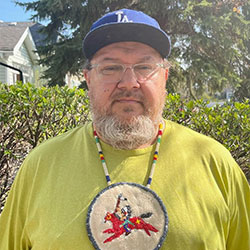
Francis Dickie Yuzicapi
Francis comes from a culturally diverse heritage which represents the majority of the Plains cultures found in Saskatchewan to this day: Ojibway, Cree, Métis, and Dakota. Dickie is unique in that he was raised by his great-grandparents who taught him traditional teachings before attending residential school. Dickie is a Survivor, and a multi-generational trauma Survivor. Dickie is currently the owner and chef of the Sioux Chef Catering Company and consults on all facets of indigenous culture. He is a master storyteller and experienced speaker who can provide his own ancestral context and historical connections in ways that bring the Truth and Reconciliation recommendations to practical reality. His workshops are led with great care to his family’s stories and to all participants’ level of Reconciliation. It is about creating understanding with care to lay the groundwork for what needs to be done to heal.